
National News Remembrance
EMERGENCY: 46 yrs ago, when Indian democracy witnessed darkest hour on June 1975


Former Prime Minister late Indira Gandhi
The imposition of Emergency is arguably one of the most controversial events in Indian politics till date. Declared by the then Prime Minister late Indira Gandhi, on 25 June 1975, it is still tagged as the ?darkest hour? of our democracy. If reports were to be believed, PM Gandhi had imposed the Emergency as there were ?imminent internal and external threats to the country.


KK passed away at the age of 53 in Kolkata
Renowned playback singer Krishnakumar Kunnath, popularly known as KK, passed away at the age of 53 in Kolkata. The singer performed at Nazul Mancha auditorium on Tuesday (May 31). He went to his hotel after his performance and collapsed. He was rushed to Calcutta Medical Research Institute (CMRI) at around 10:30 pm, where he was declared brought dead by the doctors. The exact cause of his death is unknown as of now.
Saddened by the untimely demise of noted singer Krishnakumar Kunnath popularly known as KK. His songs reflected a wide range of emotions as struck a chord with people of all age groups. We will always remember him through his songs. Condolences to his family and fans. Om Shanti.
— Narendra Modi (@narendramodi) May 31, 2022

On the occasion of Dr Ambedkar’s Jayanti, we bring you some rare pictures including some, in which he even visited Nagpur…
Dr Babasaheb Ambedkar (14 April 1891 – 6 December 1956) was an Indian jurist, economist, politician and social reformer who chaired the Drafting Committee of the Constituent Assembly and was also India’s First Minister for Law and Justice.

Shane Warne
Shane Warne, the legendary Australian spinner, passed away at the age of 52 after suffering a suspected heart attack, his management has confirmed.
A statement by the managenent read: “Shane was found unresponsive in his villa and despite the best efforts of medical staff, he could not be revived. The family requests privacy at this time and will provide further details in due course.”
More details are awaited.


Couples have a blast, win awards at ‘Hollywood Oscar Night’ in Nagpur

Renowned singer KK passes away at 53

Disgruntled Ashish Deshmukh resigns as Maharashtra Congress General Secretary

Politicians, businessmen shower blessings on Chandrashekhar Bawankule’s son Sanket at his wedding reception

Shatrughan Sinha, Prithviraj Chavan grace Ranjeet Deshmukh’s 75th birthday celebrations in Nagpur

Sumeet Raghavan on comedy: One has to understand what’s vulgar, what’s sensual
Urmila Matondkar interview: Chidambaram’s arrest puts a question mark on India’s democracy

Ranveer Allahbadia interview: Meet the man behind popular YouTube channel BeerBiceps

Watch: Gaurav Taneja speaks about his popular YouTube channel Flying Beast

Meet Gurudas Raut: The physically disabled cricketer who took Sachin Tendulkar’s wicket
Country treating sr citizens as badly as migrants last year?
- Not Sure (0%, 0 Votes)
- No (0%, 0 Votes)
- Yes (0%, 0 Votes)
Total Voters: 0
 Loading ...
-
Health5 years ago
Amphoterecin B, used for treating black fungus, to now be manufactured in Nagpur
-
 Social4 years ago
Politicians, businessmen shower blessings on Chandrashekhar Bawankule’s son Sanket at his wedding reception
-
 Social4 years ago
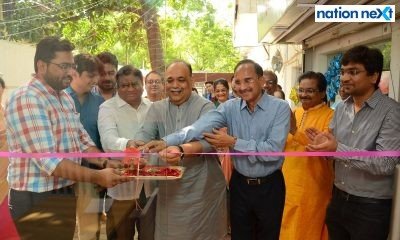
Nagpur gets its first 7 am cafe ‘SEVEN O’ ELEVEN’ at Shraddhanand Peth
-
 Parties4 years ago
Couples have a blast, win awards at ‘Hollywood Oscar Night’ in Nagpur
-
Who´s Partying Next To You9 years ago
Nagpur brings in 2017 in style at Gondwana Club
-

 Parties4 years ago
Family, friends ‘wine n dine’ at Dr Shilpa Mukherji’s birthday bash in Nagpur
-
Who´s Partying Next To You8 years ago
Party revelers make noise at Nagpur’s first silent party on New Year Eve at Gondwana Club
-

 Social4 years ago
Sunil Kedar kicks off 10-day Late Dr Shrikant Jichkar Memorial Cricket Tournament in Nagpur